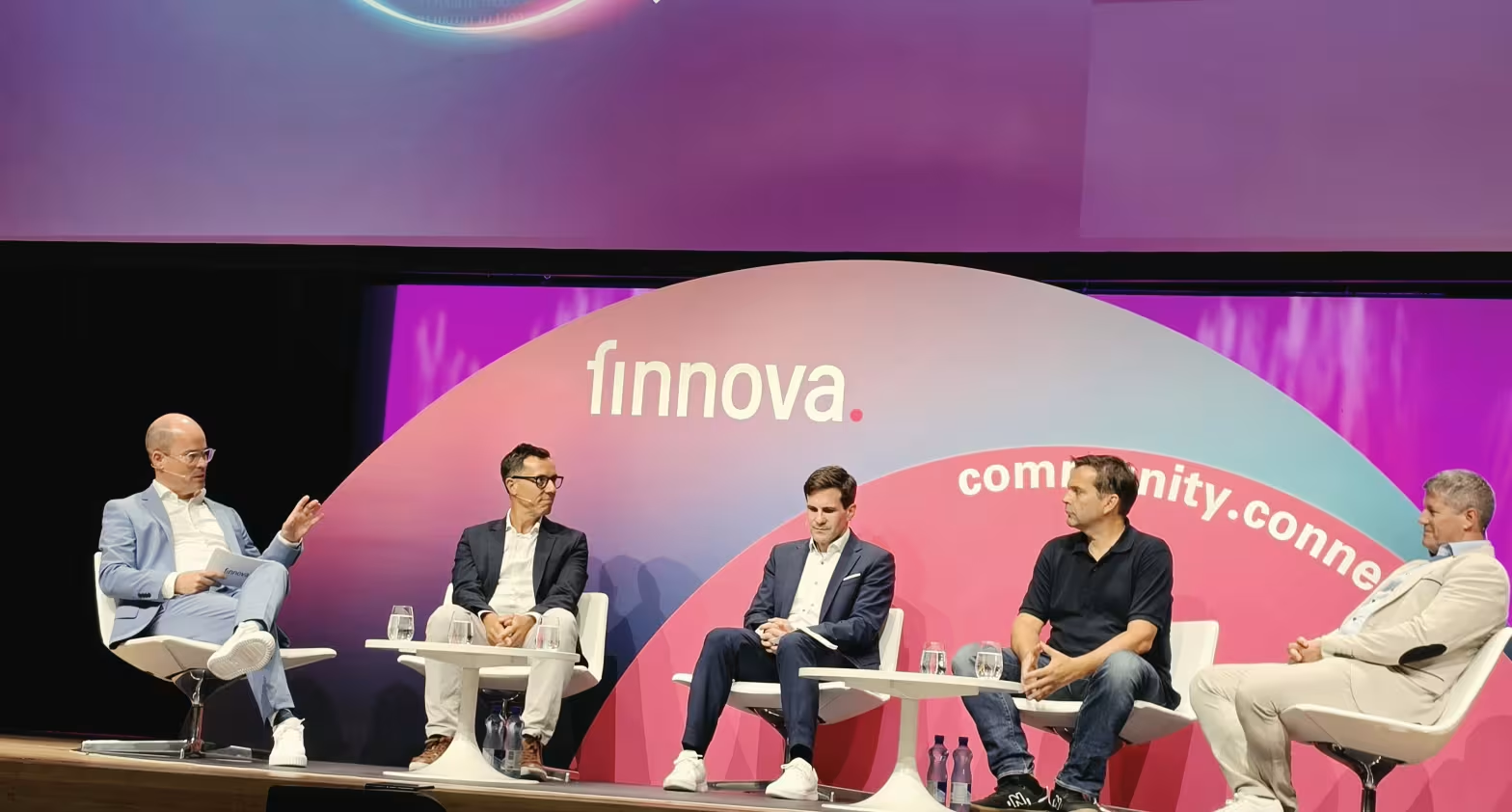
Four key takeaways emerge from the discussion:
- finnova.neo changes not only the core system, but also the surrounding architecture
The core remains the stable heart of bank IT. But innovation no longer necessarily has to take place there. What will matter is how easily new services, surrounding systems, and partners can be connected. That requires a decoupled, API-based architecture. This is exactly where a major opportunity of finnova.neo lies: further developing the core while simultaneously creating the prerequisites for more open bank IT.
- When it comes to the cloud, the either-or debate leads in the wrong direction
One of Urs Rhyner’s clearest positions on the panel: Inventx is pursuing “Hybrid by Design”. First comes the bank’s strategy, only then the choice of platform. Because in banking, besides costs, what matters above all is stable and regulatory-compliant operations, a partner with industry expertise, and the ability to evolve bank IT over the long term. Private and public cloud are therefore not a matter of belief. They are tools within an operating model that must fit the bank’s strategic development.
- Differentiation requires a strong technological foundation
Technology alone does not yet create a competitive advantage. Differentiation arises where banks use their data in a targeted way and quickly translate ideas into market-ready services. That requires business and IT to work together early on. An open architecture, powerful APIs, and a robust data foundation create the necessary leeway. With AI, this capability becomes even more important: New applications must be able to integrate into existing bank IT securely, quickly, and in a controlled manner.
- Open architectures create the foundation for new business models
This is evident in embedded finance. Technologically, a lot is possible, but in practice integration, scaling, and customer acceptance remain challenging. Especially in the fragmented Swiss market, a good API alone is not enough. It takes a functioning ecosystem and services that create real customer value and trigger willingness to pay. For bank IT, that means: It must remain open enough for new business models while also being manageable, secure, and regulatorily robust.
“It’s not the individual criterion that wins, but the ability to resolve these tensions in line with the customer’s strategy,” Urs Rhyner sums up a central idea of the discussion.
From finnova.neo to the bank IT of the future
For Inventx, the finnova.neo transformation is already concrete: With several customers, projects have been launched covering different areas of the new core banking generation. At Graubünden Cantonal Bank, Inventx is working, among other things, on introducing the finnova.neo P&S layer. At the event, Migros Bank also presented the Neo project currently underway together with Finnova and Inventx.
Inventx’s Banking Application Platform combines this Finnova expertise with secure operations, integration know-how, and hybrid cloud models. Data & AI Services complement this foundation where data is set to be used more strongly in the future for new services and differentiation.
The takeaway from the Finnova Community Event is therefore clear: finnova.neo is an important building block for the bank IT of the future. What will be decisive, however, is what banks make of it and how well core, architecture, operations, and innovation work together.