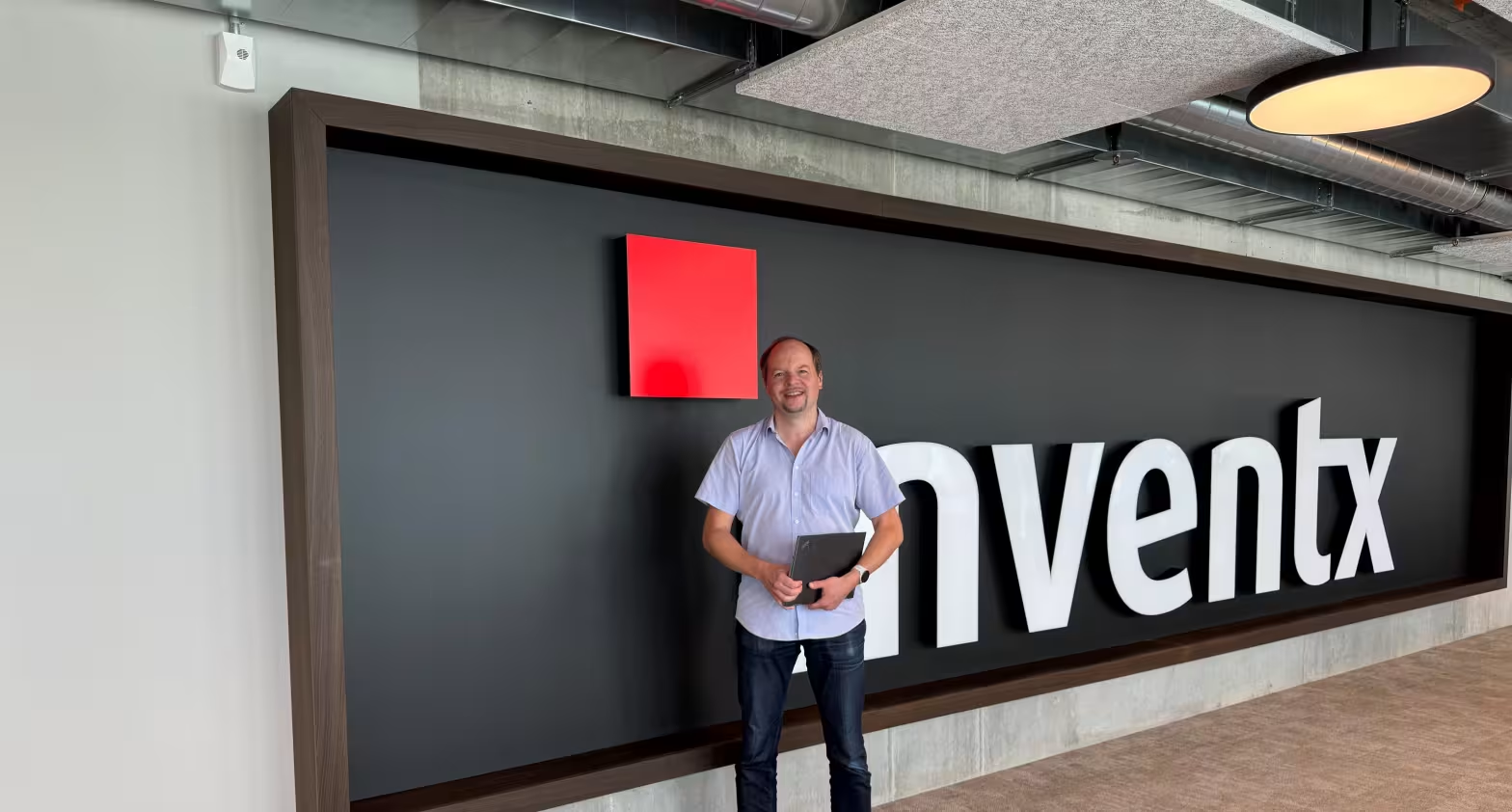
Uwe, let’s start right at the beginning. What exactly do you do in the Finnova Core Banking Operations team?
Uwe: We support the entire technical lifecycle of Finnova for our customers. That includes operations, engineering, further development, and incident handling. Finnova provides the software, and together with other Inventx teams we ensure that it runs reliably in each customer environment. New components have to be prepared, operationalized, and cleanly integrated into operations. In short: when it comes to end-to-end operation of Finnova, we’re right in the middle of it.
With finnova.neo, a new world is now being created step by step. What does that mean in concrete terms for you?
Uwe: Above all, that we’ll be working in two worlds for a longer period of time. There won’t be a big bang across all customers. Individual modules are prepared, tested, introduced, and existing components are replaced later on. And each customer has their own roadmap.
So the new keeps steadily taking up more space. At the same time, the existing knowledge remains important. For us, that means: learning and applying new things quickly without forgetting what has proven itself. This flexibility is becoming increasingly important.
Technically, we’re moving to container technology. As an intermediate step, we’re using Podman Quadlet in the Linux environments. Over the next few years, migration to a Kubernetes runtime will follow.
What new skills do you need for that?
Uwe: First of all, some skills remain timeless: structured and analytical work, diligence, and a strong customer focus. And just as important to me is a team where collaboration works and people enjoy working together.
From a technology standpoint, however, our playing field is becoming much bigger. Containers, Kubernetes, API management, and cloud-native technologies are gaining importance with finnova.neo. That also changes our work—from a single server to distributed systems and the corresponding tools for deployment, monitoring, and troubleshooting. There’s a balancing act between focus in the form of vertical deepening and, at the same time, understanding the overall system.
Does that mean the classic Finnova specialist will become obsolete at some point?
Uwe: Clearly not. Deep Finnova and database know-how remains extremely valuable. We will continue to need specialists—for example, in the DBA environment.
At the same time, new technologies and roles are being added. Knowledge is becoming broader. Anyone who understands Finnova and can also put topics like APIs, containers, monitoring, or cloud technologies into context gets a very exciting overall picture. It’s exactly this mix that makes the transformation interesting to me.